Physical Attributes
The serial number is printed on the back of every YubiKey in the YubiKey 5 Series, YubiKey 5 FIPS Series, YubiKey 5 CCN Series, Yubikey 5 Enhanced PIN Series, Security Key Series, and YubiKey Bio Series. The 2D barcode (Data Matrix code) of the serial number is also printed on the back of every YubiKey in the 5 Series, Security Key Series, and Bio Series except on the 5C Nano form factor, which is too small to accommodate the 2D barcode.
All current YubiKeys are IP68-rated under the IEC standard 60529.
See the Yubico technical data sheet, What is a YubiKey? Product specification for additional certifications and specifications.
YubiKey NFC Form Factor
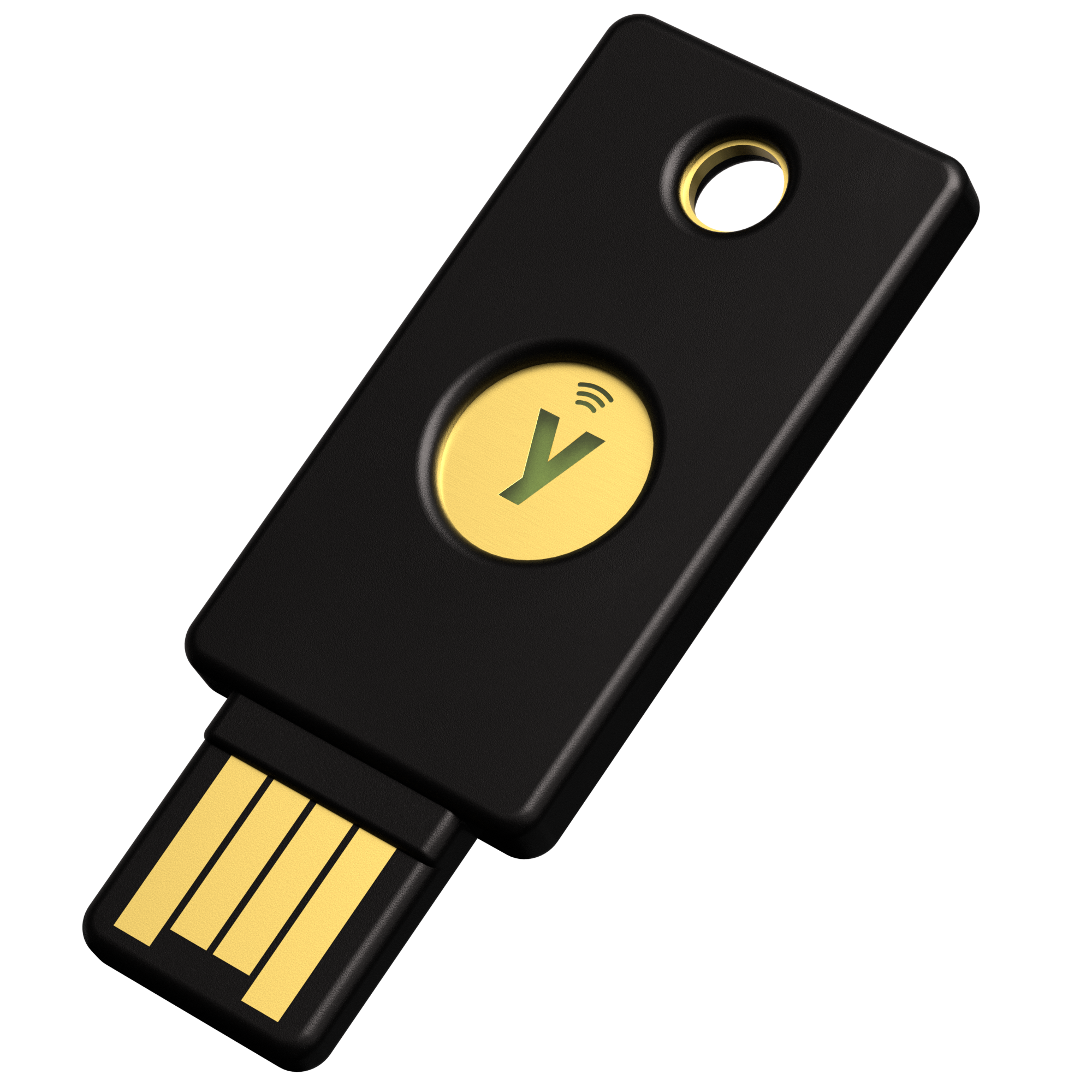
YubiKey - NFC plus USB-A Form
| Series with this Form | Additional References |
|---|---|
| YubiYubiKey 5 | YubiKey 5 Series |
| YubiKey FIPS | YubiKey 5 FIPS Series |
| YubiKey CCN | YubiKey 5 CCN Series |
| YubiKey Enhanced PIN | YubiKey 5 Enhanced PIN Series |
| Yubico Security Key | Security Key Series |
See also, Support article, YubiKey 5 NFC.
YubiKey C NFC Form Factor

YubiKey - NFC plus USB-C Form
| Series with this Form | Additional References |
|---|---|
| YubiYubiKey 5 | YubiKey 5 Series |
| YubiKey FIPS | YubiKey 5 FIPS Series |
| YubiKey CCN | YubiKey 5 CCN Series |
| YubiKey Enhanced PIN | YubiKey 5 Enhanced PIN Series |
| Yubico Security Key | Security Key Series |
See also, Support article, YubiKey 5 NFC.
YubiKey Nano Form Factor
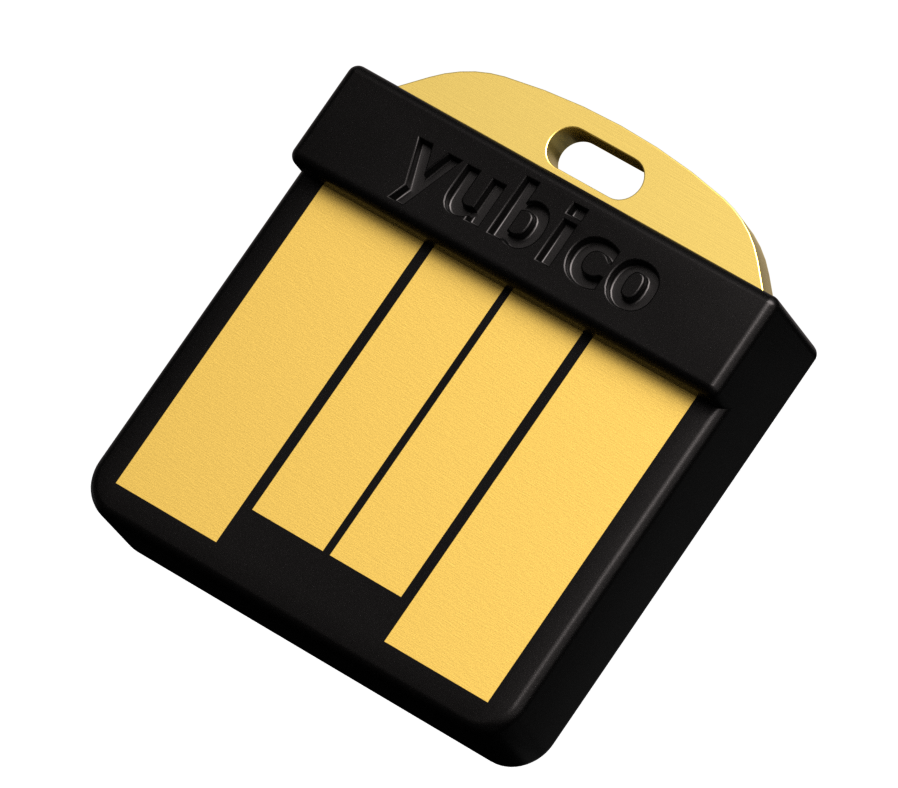
YubiKey Nano - USB-A Form
| Series with this Form | Additional References |
|---|---|
| YubiYubiKey 5 | YubiKey 5 Series |
| YubiKey FIPS | YubiKey 5 FIPS Series |
| YubiHSM | YubiHSM Auth Specifics |
See also, Support article, YubiKey 5 Nano.
YubiKey 5C Form Factor
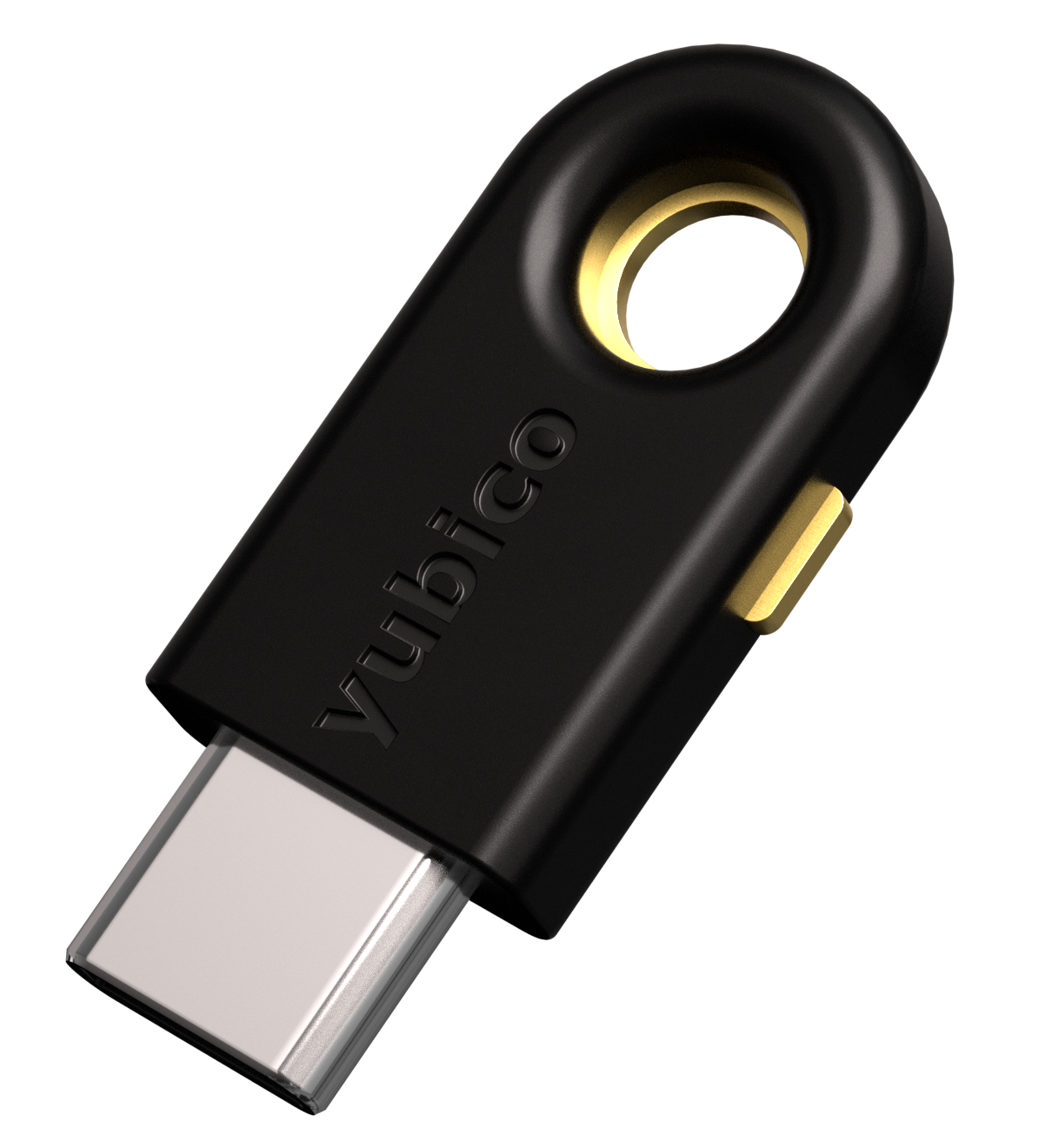
YubiKey - USB-C Form
| Series with this Form | Additional References |
|---|---|
| YubiYubiKey 5 | YubiKey 5 Series |
| YubiKey FIPS | YubiKey 5 FIPS Series |
See also, Support article, YubiKey 5C.
YubiKey 5C Nano Form Factor
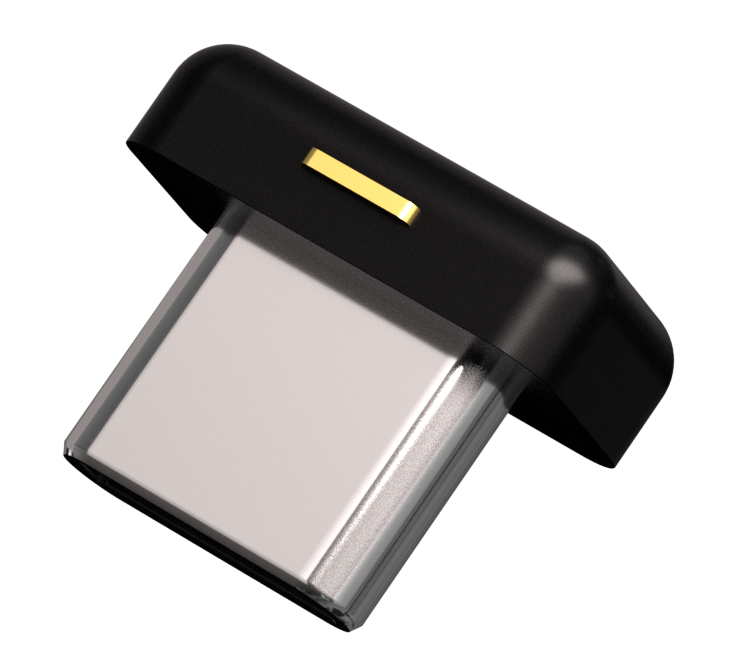
YubiKey Nano - USB-C Form
| Series with this Form | Additional References |
|---|---|
| YubiYubiKey 5 | YubiKey 5 Series |
| YubiKey FIPS | YubiKey 5 FIPS Series |
See also, Support article, YubiKey 5C Nano.
YubiKey 5Ci Form Factor
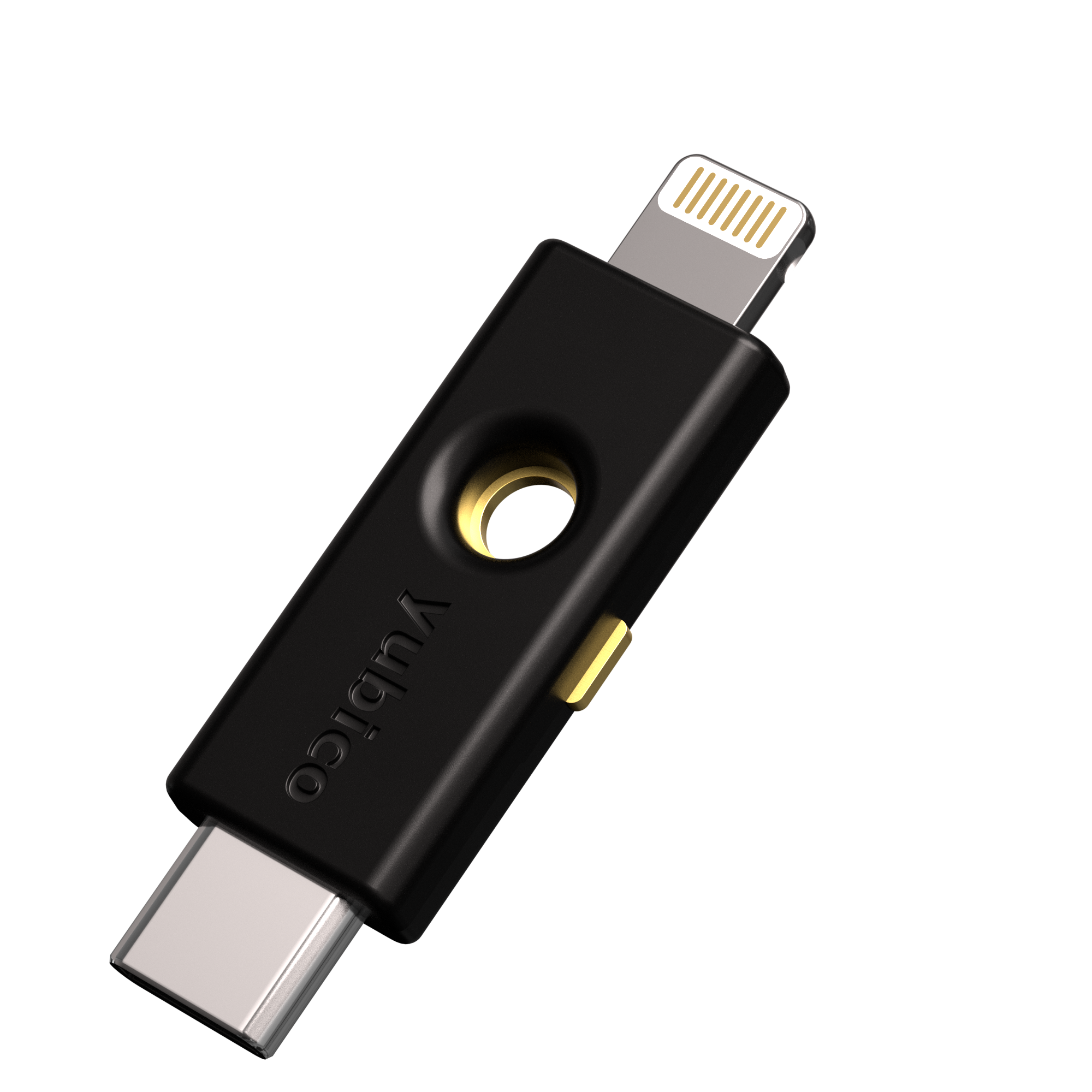
YubiKey - USB-C plus Lightning Form
| Series with this Form | Additional References |
|---|---|
| YubiYubiKey 5 | YubiKey 5 Series |
| YubiKey FIPS | YubiKey 5 FIPS Series |
See also, Support article, YubiKey 5Ci.
YubiKey 5 FIPS Series
YubiKey 5 FIPS is available in all YubiKey 5 Series form factors.
| NFC plus USB-A | NFC plus USB-C | Nano USB-A | USB-C | Nano USB-C | USB-C i |
|---|---|---|---|---|---|
|
|
|
|
|
|
Additional References:
FIPS-Specific Marking
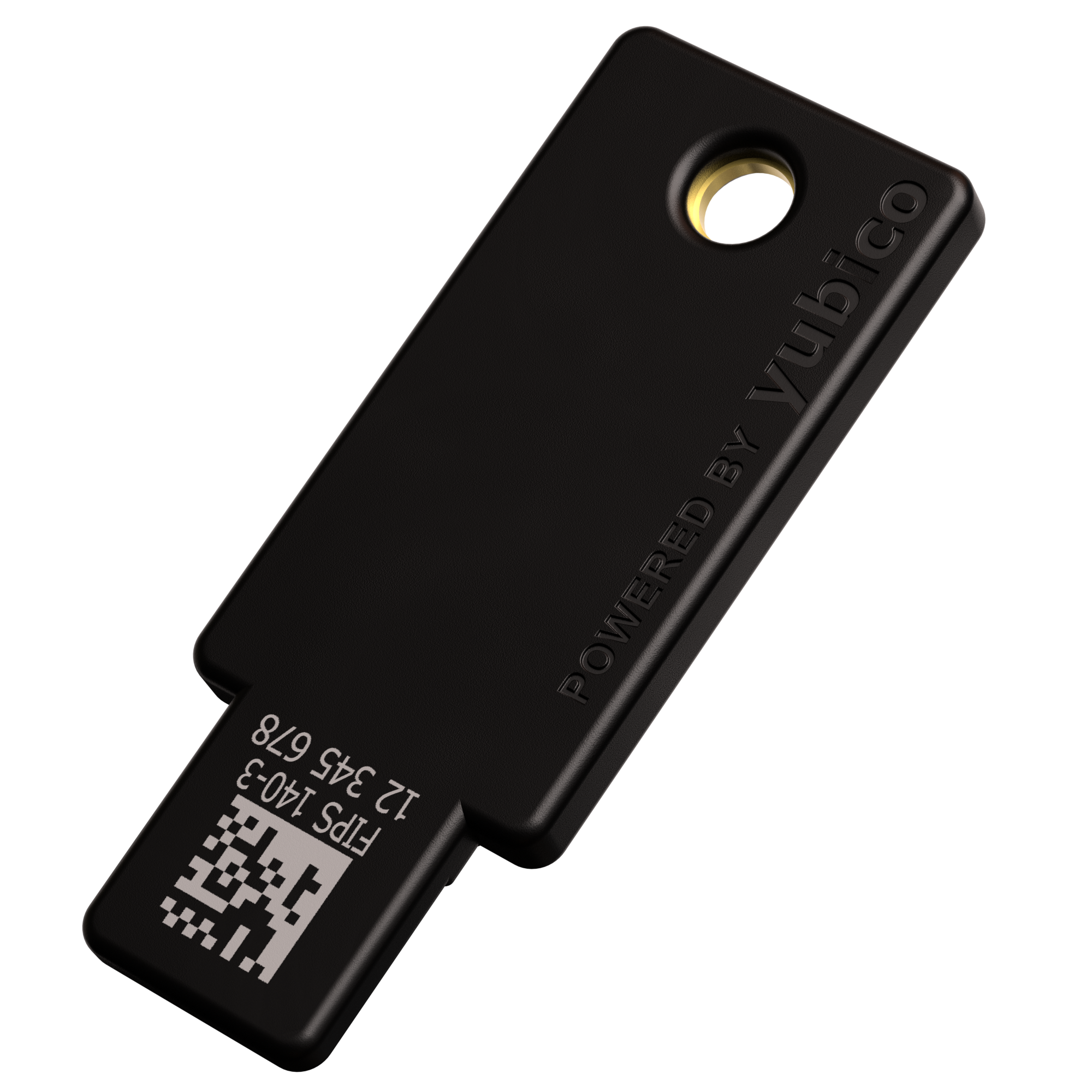
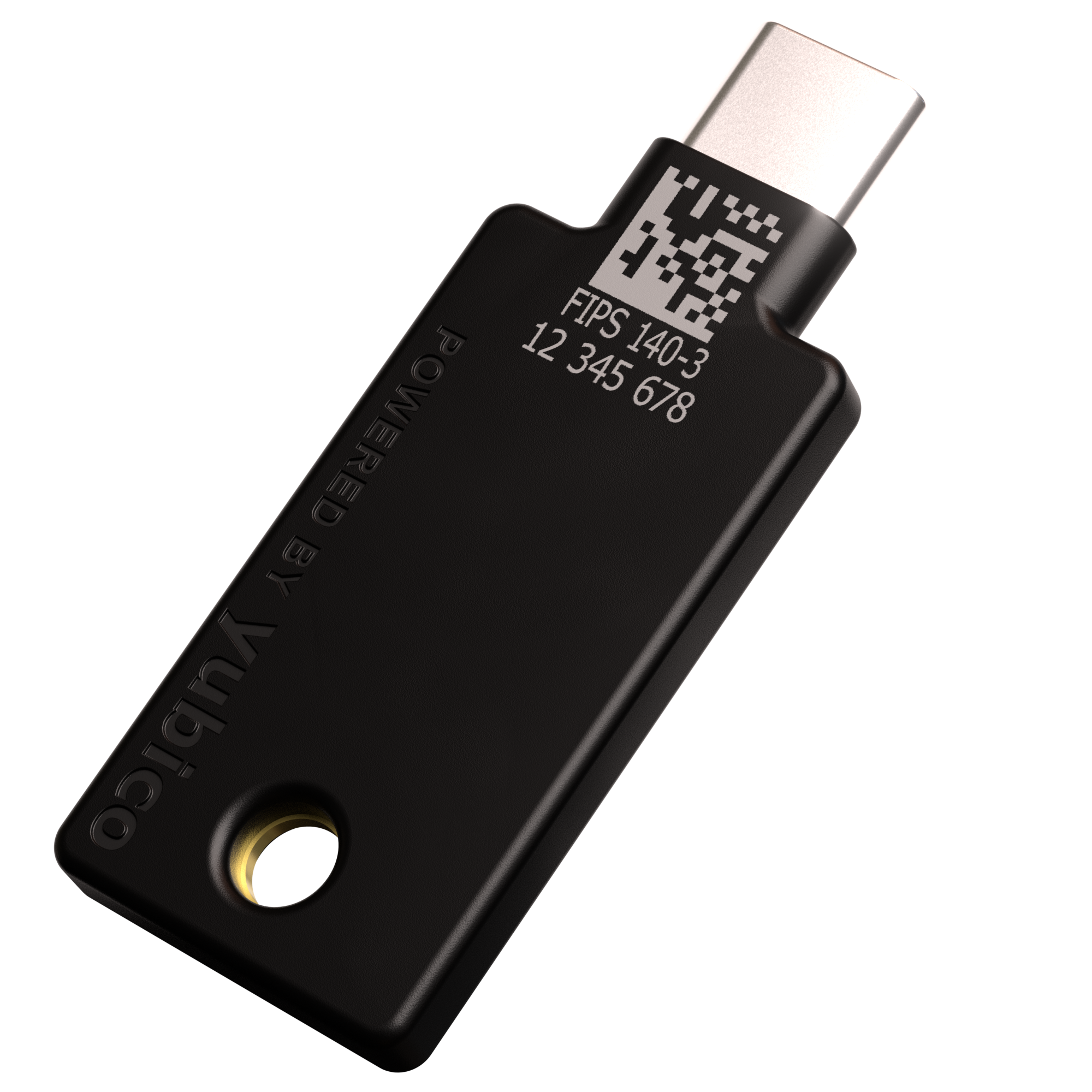
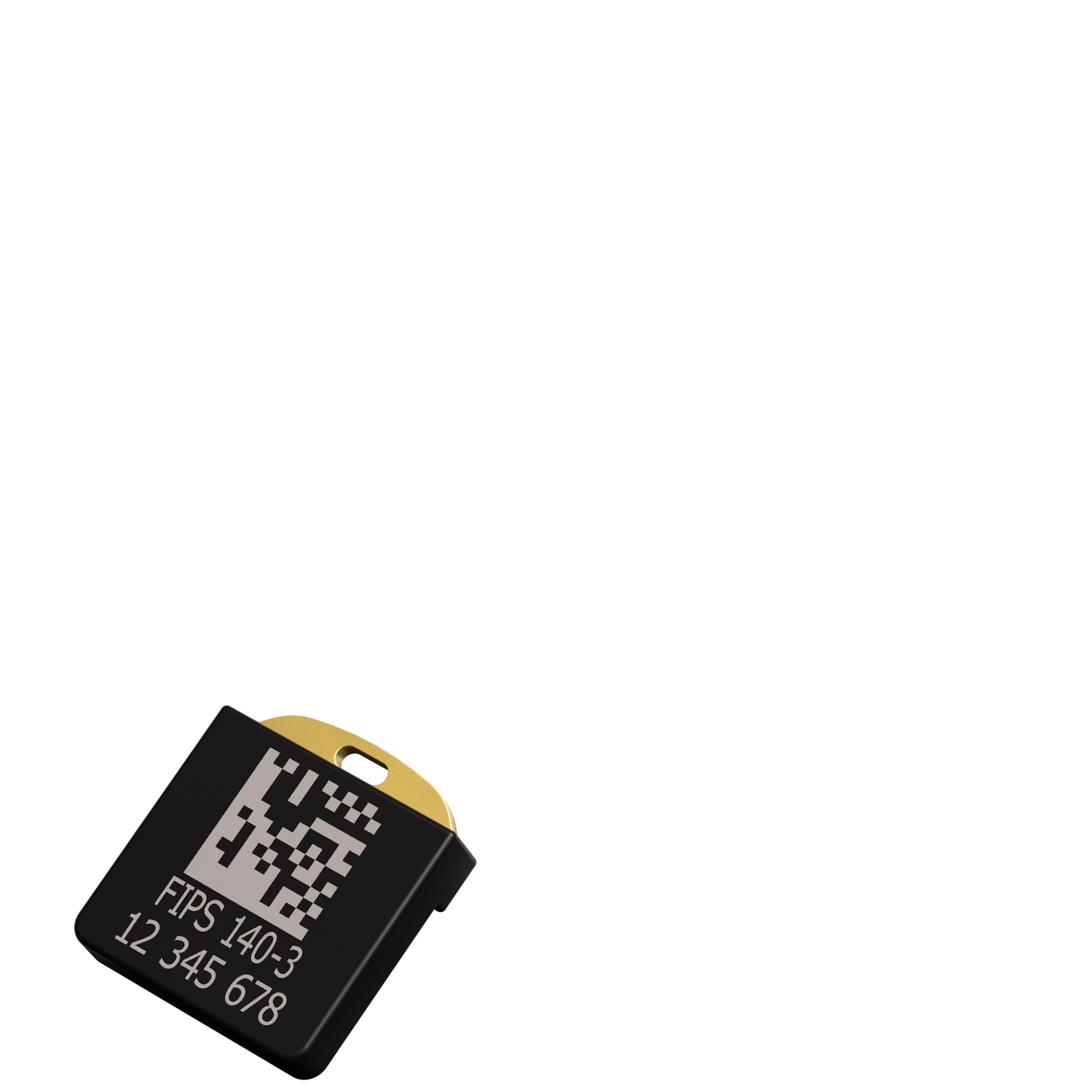
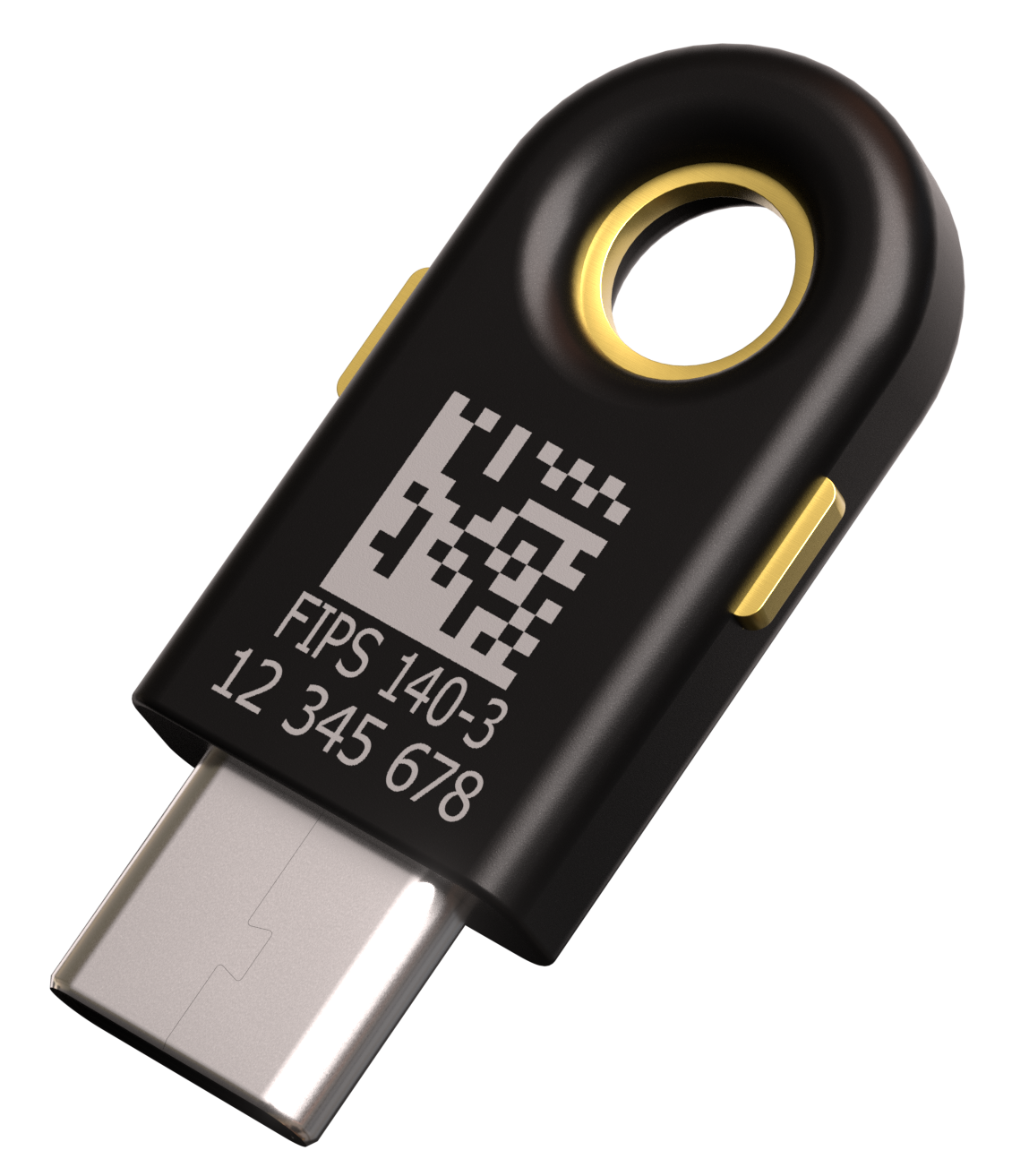
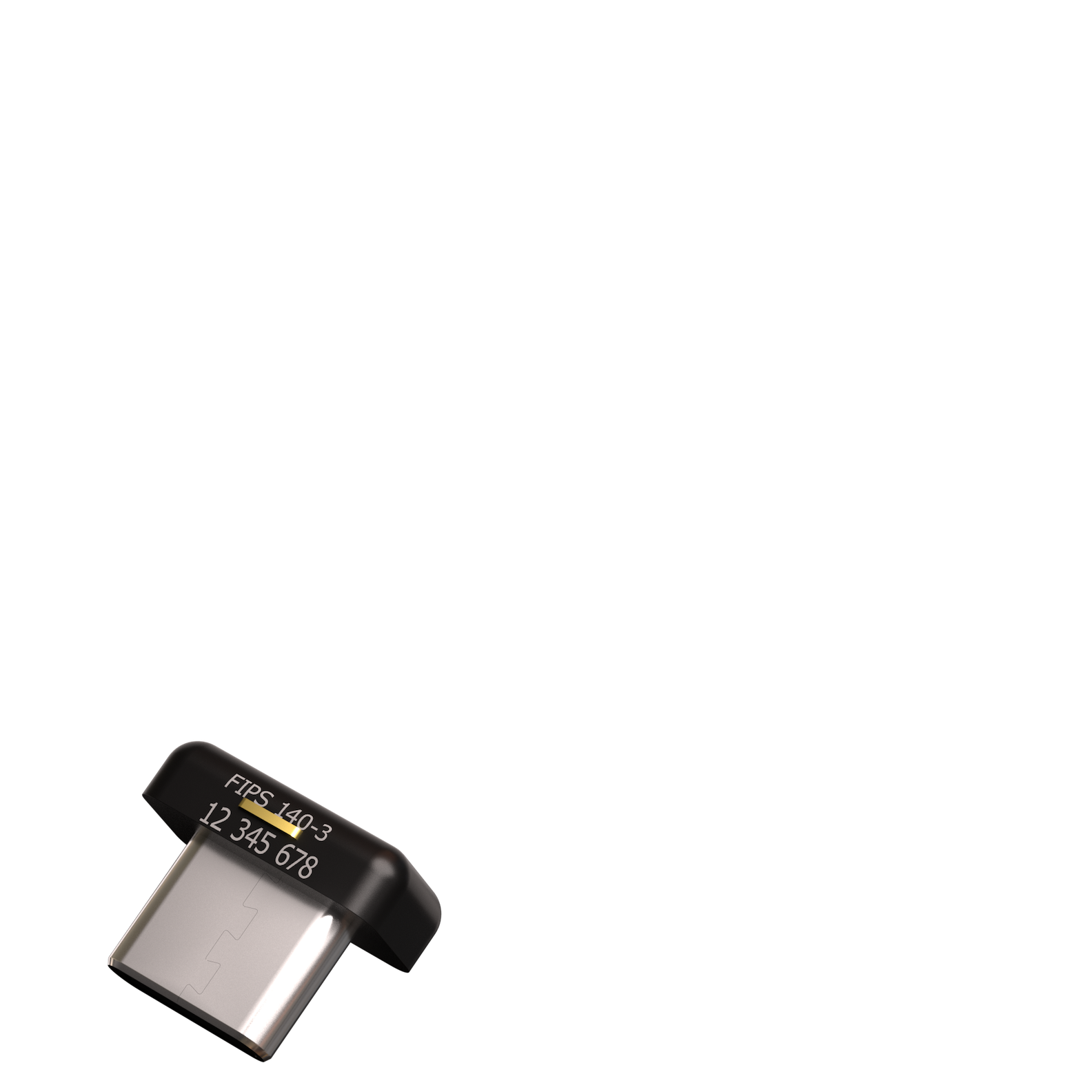
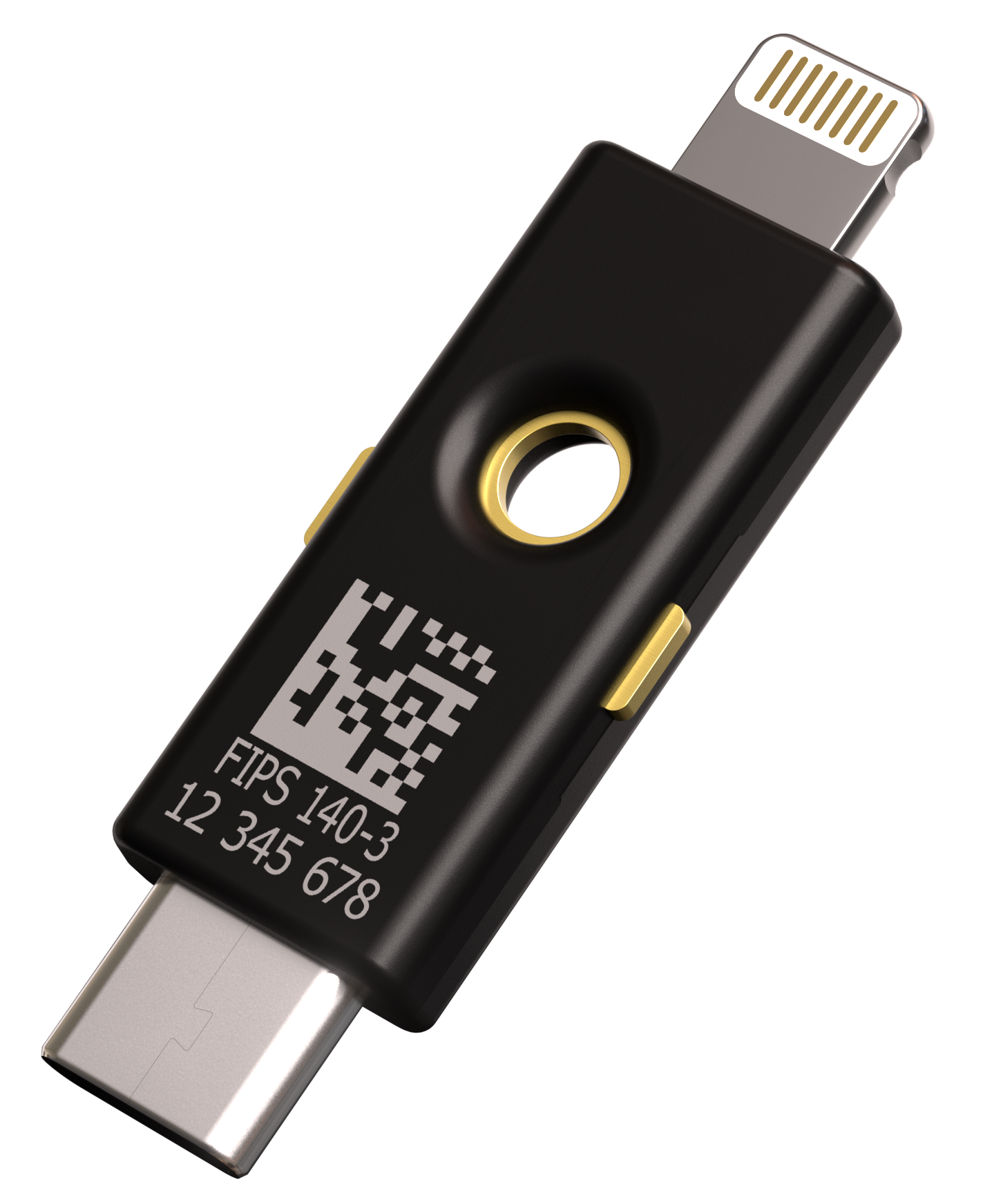
All of the keys in the YubiKey 5 FIPS Series have the acronym FIPS inscribed on the backs of the YubiKeys, underneath the Data Matrix code. v5 runs up on the left side of the Data Matrix code, except for the YubiKey 5C Nano, which has it on the right.
| NFC and USB-A | NFC and USB-C | Nano USB-A | USB-C | Nano USB-C | USB-C i |
|---|---|---|---|---|---|
 |
 |
 |
 |
 |
 |
YubiKey 5 Enhanced PIN Series
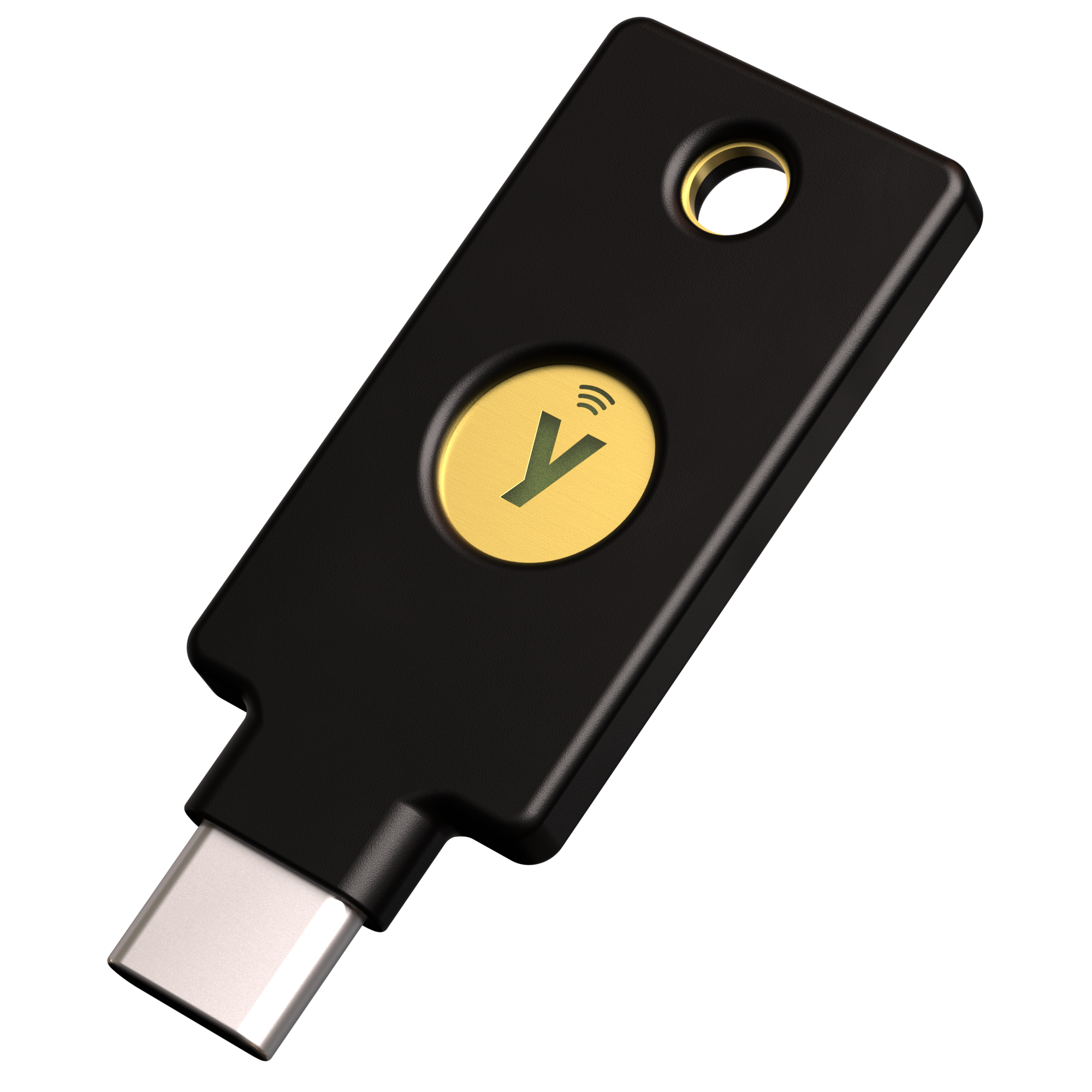
| NFC and USB-A | NFC and USB-C |
|---|---|
 |
 |
Additional References:
- YubiKey 5 Enhanced PIN Series
- Support articles:
Enhanced PIN Specific Marking
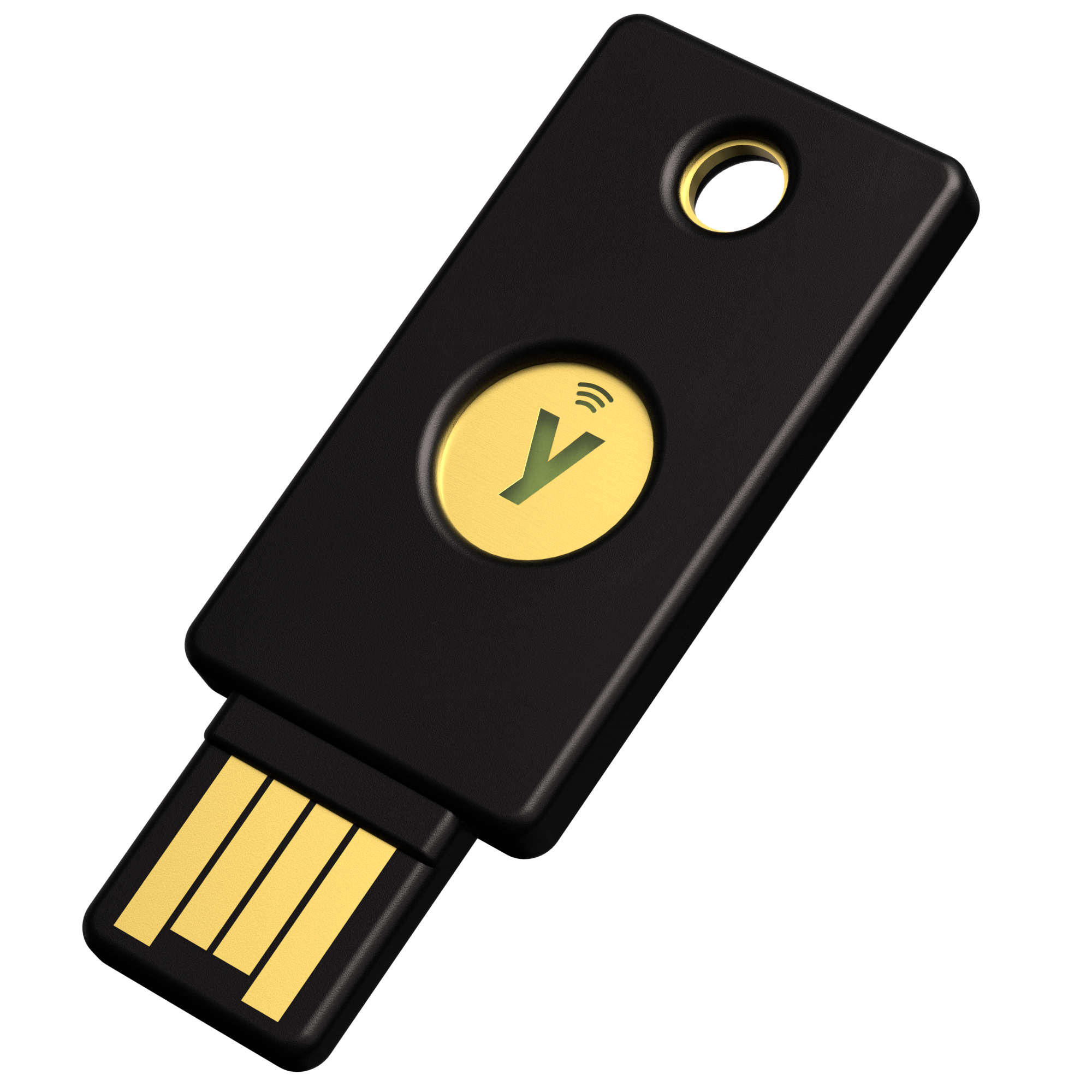
All of the keys in the YubiKey 5 Enhanced PIN Series have the acronym EPIN and the serial number inscribed on the backs of the YubiKeys, underneath the Data Matrix code.
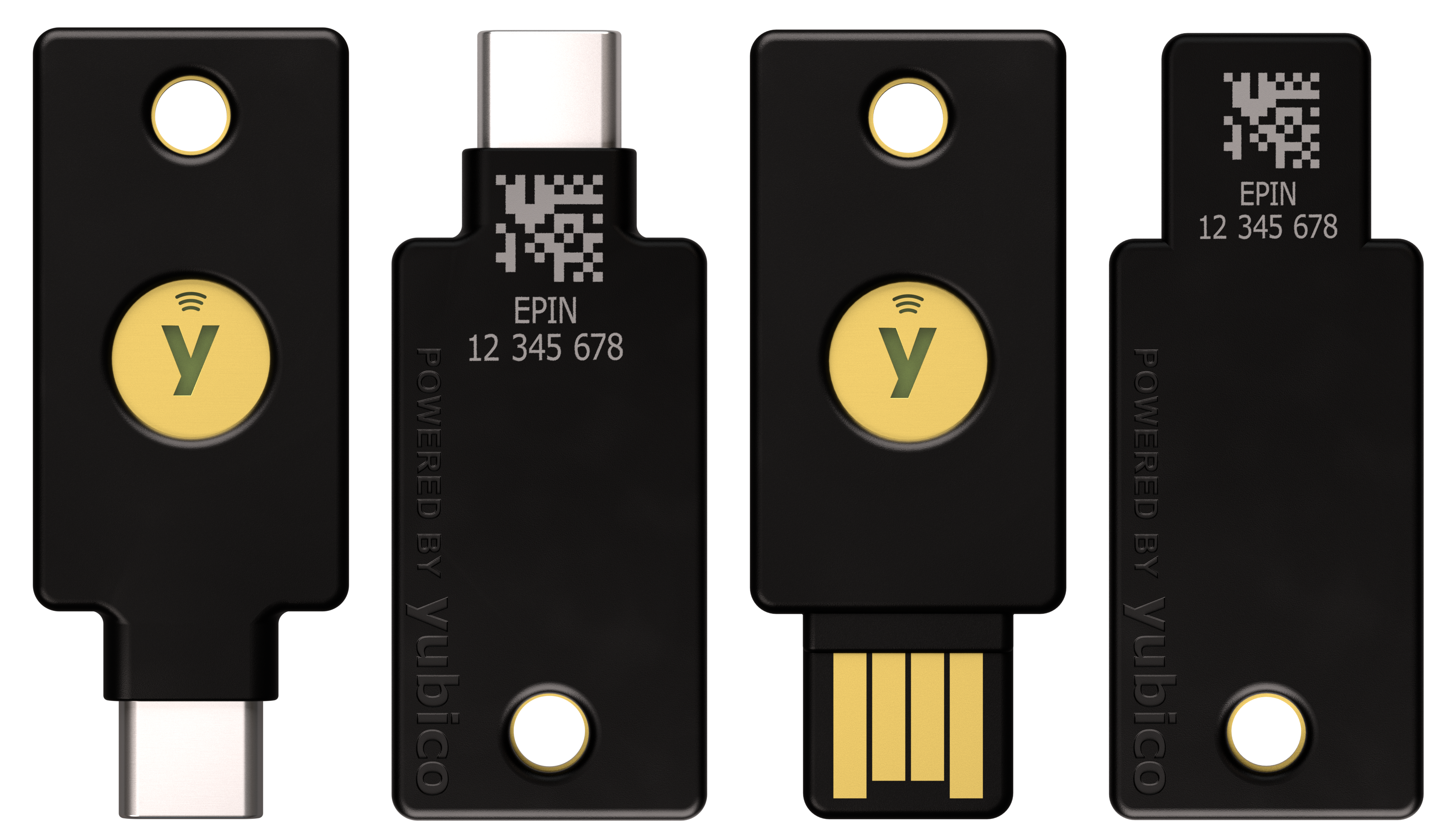
YubiKey Enhanced PIN Series Markings
YubiKey 5 CCN Series
| NFC and USB-A | NFC and USB-C |
|---|---|
|
|
Additional Reference:
CCN Specific Marking
All of the keys in the YubiKey 5 CCN Series have the acronym CCN and the serial number inscribed on the backs of the YubiKeys, underneath the Data Matrix code.
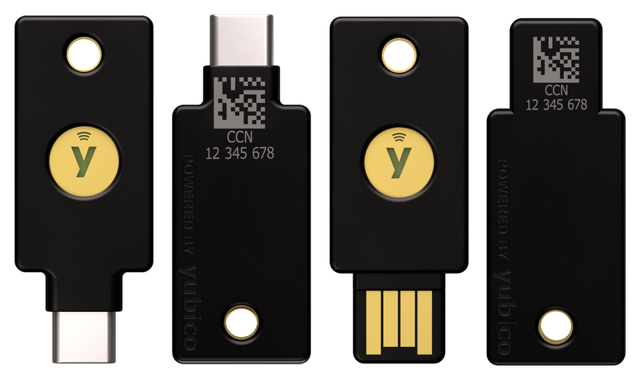
YubiKey CCN Series Markings
YubiKey Bio Series
The Yubico Bio Key Series are a standalone series and are not within the YubiKey 5 Series. Though they share common functionality.
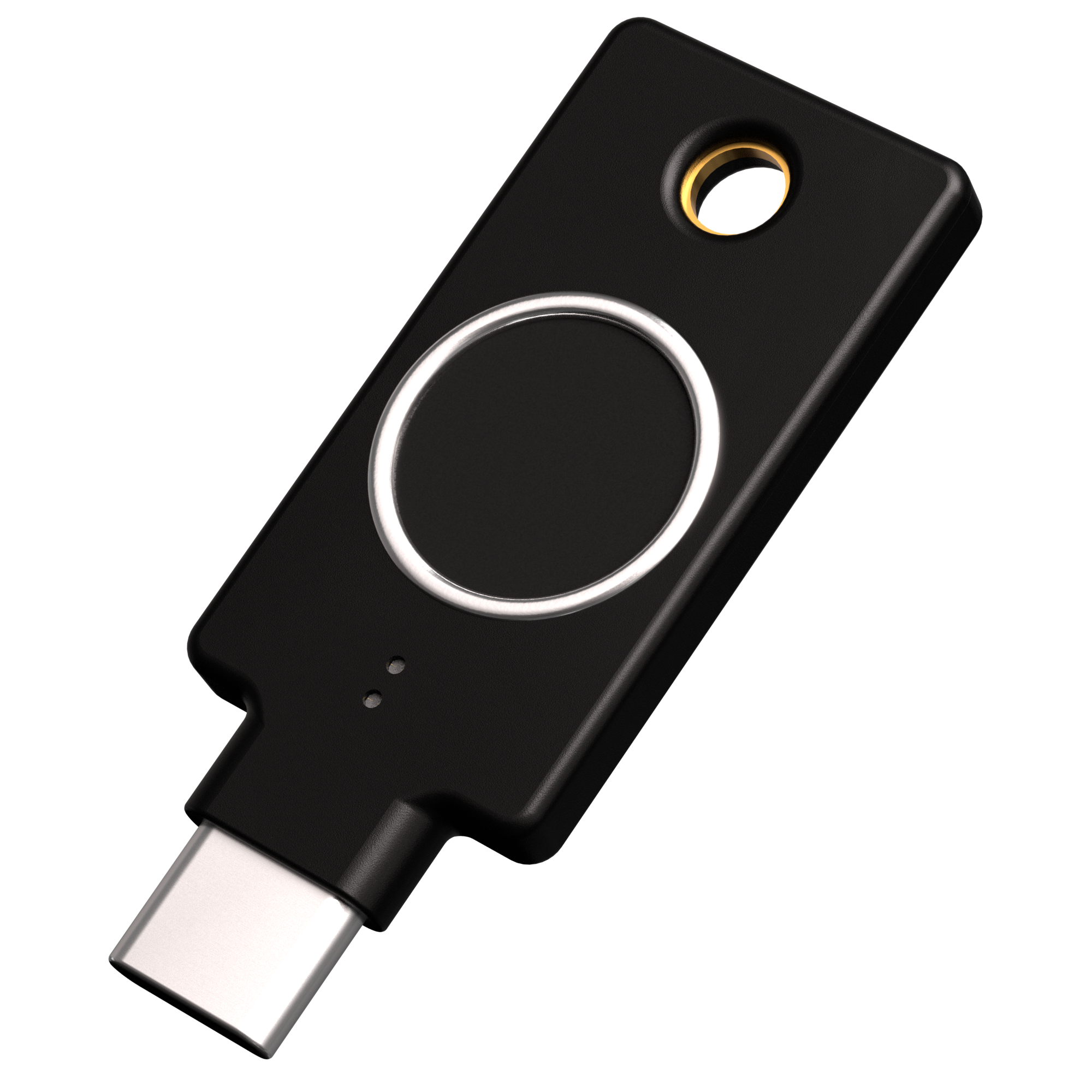
The YubiKey Bio series has two editions: FIDO Edition and YubiKey Bio Multi-protocol Edition. They are available with either a USB-A or USB-C connector in addition to the BIO sensor. NFC is not supported.
| Bio Sensor and USB-A | Bio Sensor and USB-C |
|---|---|
 |
 |
Additional References:
YubiKey Bio Series Marking
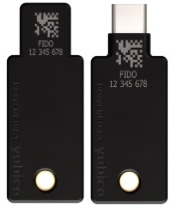
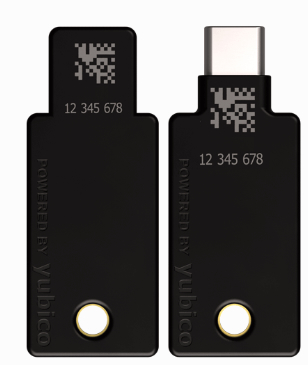
The laser marking of the FIDO Edition of the YubiKey Bio Series was changed in March 2024. To distinguish the FIDO Edition from the Multi-protocol Edition, FIDO is marked on the back near the serial number and data matrix. YubiKeys of product type YubiKey Bio Series - FIDO Edition produced before March 2024 do not have FIDO marked on the back, instead they have only the serial number and data matrix on the back.
FIDO Edition
March 2024 and later
|
FIDO Edition before March 2024
and Multi-protocol Edition
|
|---|---|
 |
 |
Security Key Series
The Yubico Security Key Series are a standalone series and are not within the YubiKey 5 Series. Though they share common functionality.
The Yubico Security Key series are available in form factors with either a USB-A or USB-C connector and the Near Field Communication (NFC) connection.
| NFC and USB-A | NFC and USB-C |
|---|---|
|
|
Form factor is set during manufacturing and returned as a one-byte value. Currently defined values for this are listed in the table below:
Form Factor
|
YubiKey Value
|
Security Key
Value, FW 5.4+
|
|---|---|---|
| NFC and USB-A | 0x01 | 0x41 |
| NFC and USB-C | 0x03 | 0x43 |
Additional References:
- Security Key Series Overview
- Support articles:
Security Key Series Specific Marking
All of the keys in the YubiKey 5 Security Key Series have the acronym FIDO inscribed on the backs of the Security Keys. This applies to both the Enterprise Edition and non-enterprise Security Keys.
As of January 2023, the markings on the back of the security keys are different for the non-enterprise and enterprise editions.
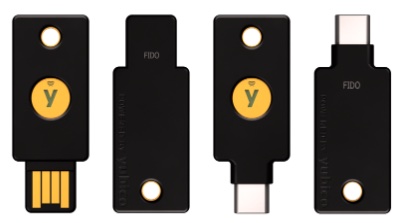
- Non-Enterprise edition of the security key series the back only has FIDO inscribed.
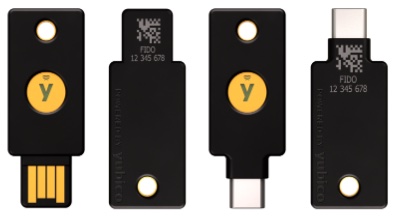
- Enterprise Edition security key series the back has FIDO, scan code, and serial number inscribed.
Security Key
Non-Enterprise
|
Security Key
Enterprise
|
|---|---|
 |
 |
YubiKey Connection Interfaces
We refer to the ways that a computer, phone, tablet, etc. can connect with a YubiKey as the physical interfaces.
USB Connector
All of the models in the YubiKey 5 Series and Yubico Security Key Series provide a USB 2.0 interface, regardless of the form factor of the USB connector. The YubiKey presents itself as a USB composite device in addition to each individual USB interface.
USB A or USB C or both connectors are supported.
The USB PID and iProduct string changes depending on which of the USB interfaces are enabled. Additionally, Security Key Series and YubiKey Bio Series, PID and supported USB interfaces can be different depending on the YubiKey firmware version. The PID and iProduct strings are described in the YubiKey USB ID Values.
See also, Yubico SDK, Physical Interfaces.
Understanding the USB Interfaces
USB interfaces are the different channels that software can use to communicate with the YubiKey when it is connected via USB. Each interface enables a specific set of applications on the YubiKey. If an interface is disabled, none of the applications that use that interface will be available.
Note
With previous YubiKeys and older Yubico firmware, the USB interfaces were referred to as modes and the FIDO interface was called the U2F mode.
CCID with USB
The Chip Card Interface Device (CCID) interface provides communication for the PIV / Smart Card, OATH (HOTP and TOTP), and OpenPGP applications.
The YubiKey presents itself to the operating system as a USB smart card reader. Each of the applications presents itself as a separate smart card attached to that reader. The CCID interface is supported on Windows and MacOS, and on Linux with the PC/SC package. CCID is also supported on Android.
As of YubiKey 5.8, Security Keys and YubiKey Bio - FIDO Edition now ship with the CCID interface enabled by default, reporting to the operating system as a combined FIDO+CCID device.
This change modifies the reported USB Product ID (PID) for our standard Security Keys and Bio FIDO keys. If you hardcode PID checks into your environment or just want to cross-reference your device, you can find a comprehensive list of all possible PID values at YubiKey USB ID Values.
Note
Developers: Access to the CCID interface on iOS, requires the Yubico iOS SDK.
See FIDO over CCID.
FIDO with USB
The FIDO interface provides access to the FIDO2 and U2F applications.
The FIDO interface presents itself as a generic human interface device (HID). The FIDO interface is supported on all desktop platforms running WebAuthn-compatible browsers or applications, as well as on Android and iOS (starting in iOS 13).
As of YubiKey Firmware 5.8, FIDO over Chip Card Interface Device (CCID) allows CTAP 2.x commands to be carried using ISO7816 APDU (Application Protocol Data Unit) messaging over the USB CCID smart card interface instead of the USB HID (Human Interface Device) FIDO interface. For platforms, this provides a standards-defined alternative transport for CTAP that integrates with existing smart card infrastructure.
OTP with USB
The OTP interface presents itself to the operating system as a USB keyboard. The OTP application is accessible over this interface.
The OTP interface is supported natively across all desktop OS environments (macOS, Windows, Linux) as well as on mobile OS platforms (iOS, Android).
Output is sent as a series of keystrokes from a virtual keyboard, allowing the OTP application to work with any environment that supports USB keyboard input.
NFC Interface
The Near Field Communication (NFC)-capable hardware security keys from Yubico provide an NFC wireless interface and a USB interface. These models include the RFID standard specific to the ISO/IEC 14443-A and ISO/IEC 14443-4 NFC format. RFID implementations not included in the listed ISO standards are not supported.
Yubico NFC YubiKeys:
- YubiKey 5 and YubiKey 5C
- YubiKey 5 FIPS and YubiKey 5C FIPS
- YubiKey 5 Enhanced PIN and YubiKey 5C Enhanced PIN
- Security Key and Security Key C
For an example of the NDEF URI format, click the YubiKey NFC demo link. The <OTP> value is replaced with the OTP generated by the YubiKey.
For Apple iPhone devices, iPhone 7 or newer is required. Background tag reading is supported in the iPhone XS and newer.
For operations that require a touch, touch the YubiKey within the first 20 seconds of the operation request to succeed.
When using a desktop NFC reader:
- To help prevent unintended access, a YubiKey placed on a desktop NFC reader might power down unless the NFC reader power-cycles. This prevents the YubiKey from powering down.
- To regain connectivity with an NFC reader, remove the YubiKey from the reader and reposition it on the reader.
Apple Lightning® Connector
The YubiKey 5Ci presents itself as an Apple iOS peripheral. It is able to interact with:
- Any iOS app using the Yubico YubiKey iOS SDK.
- Any app input data field through the touch-triggered OTP.
- Any WebAuthn-compliant application (starting in iOS 13). This includes the Safari browser.
When connecting the YubiKey 5Ci through Lightning®, the interfaces enabled setting is common to both USB-C and Lightning®. Enabling or disabling an interface applies to both connections.
Note
Developers: Enabling apps within iOS to use advanced protocols that send and receive information from the YubiKey 5Ci requires that you:
- Use the Yubico iOS SDK. See Yubico iOS SDK
- Register the app with Yubico. See Register HYour App.
The USB and iProduct strings that are displayed when connecting through Lightning® or USB are specific to the connection type. They are described in the YubiKey USB ID Values guide.
YubiKey 5Ci
Like the USB interface, the YubiKey 5Ci’s Lightning® interface also uses a variety of channels for communication between the YubiKey and iOS.
The YubiKey 5Ci presents itself as an Apple iOS peripheral. It is able to interact with:
- Any iOS app using the Yubico YubiKey iOS SDK.
- Any app input data field through the touch-triggered OTP.
- Any WebAuthn-compliant application (starting in iOS 13). This includes the Safari browser.
When connecting the YubiKey 5Ci through Lightning®, the interfaces enabled setting is common to both USB-C and Lightning®. Enabling or disabling an interface applies to both connections.
Note
Developers: Enabling apps within iOS to use advanced protocols that send and receive information from the YubiKey 5Ci requires that you:
- Use the Yubico iOS SDK. See Yubico iOS SDK
- Register the app with Yubico. See Register HYour App.
The USB and iProduct strings that are displayed when connecting through Lightning® or USB are specific to the connection type. They are described in our Support article YubiKey USB ID Values.
FIDO2 with USB-C or Lightning
FIDO2 support is available to Apple devices via the USB-C or Lightning® connectors of the YubiKey 5Ci. FIDO2/WebAuthn can be achieved over USB-C using any of the following options:
ASWebAuthenticationSessionSFSafariViewController- Redirect to Safari browser
iPad and iPad Pro
For users of keys in the YubiKey 5 Series, because the iPad Pro does not have a Lightning port but does have a USB port, support depends on what you want to do. All those aspects are covered by the second part of our Support article Getting Started with iOS.
From the developer perspective, support for the iPad Pro has some limitations. Consult Security Key Compatibility for detailed instructions on working around those limitations.
Note
To see which U2F/FIDO2 security keys currently work with iOS/iPadOS 13.3+ devices using the Safari browser in combination with apps using SFSafariViewController or ASWebAuthenticationSession, see Supporting FIDO2 Security Keys on iOS or iPadOS.
YubiKey ID Numbers
Various security protocols and use cases require valid devices identification. To locate the ID numbers:
- For Authenticator Attestation Globally Unique Identifier (AAGUID) see YubiKey hardware FIDO2 AAGUIDs.
- For USB Product Identifier (PID), see How to find the USB Product ID (PID) of your YubiKey and YubiKey USB ID values.
- For U2F attestation Object Identifier (OID), see The YubiKey FIPS 4 Series Technical Manual, U2F Attestation.
Verify the YubiKey and Packaging
Each YubiKey Series has its own packaging style. Be sure you received the YubiKey you ordered. See YubiKey packaging for images and description of the packaging used for each YubiKey Series.
When you receive your YubiKey, check that the packaging has not been tampered with. Check that the:
- YubiKey arrives in the correct Yubico packaging
- Plastic shell and seal is not broken or torn
- Cardboard wrap is intact and shows no signs of wear or tear
If you suspect any tampering, Submit a request.
When in doubt, you can also easily test that your YubiKey is a genuine YubiKey.
Go to Verify your Yubikey.
Insert your Yubikey.
Click Verify Device.
The response shows images your Yubikey form factor and firmware version.
Care and Cleaning
YubiKeys, including YubiKey Bio, are IP68-rated. This means you can expect the keys to not allow ingress of dust up to level 6 and water resistance up to level 8 as defined by the International Electrotechnical Commission, for ingress protection (IP). See European Standards, BS EN 60529:1992+A2:2013.
To clean the YubiKey, including YubiKey Bio sensors, use wipes impregnated with no more than 70% isopropyl alcohol.